
PixmindImagen
000
Prompt
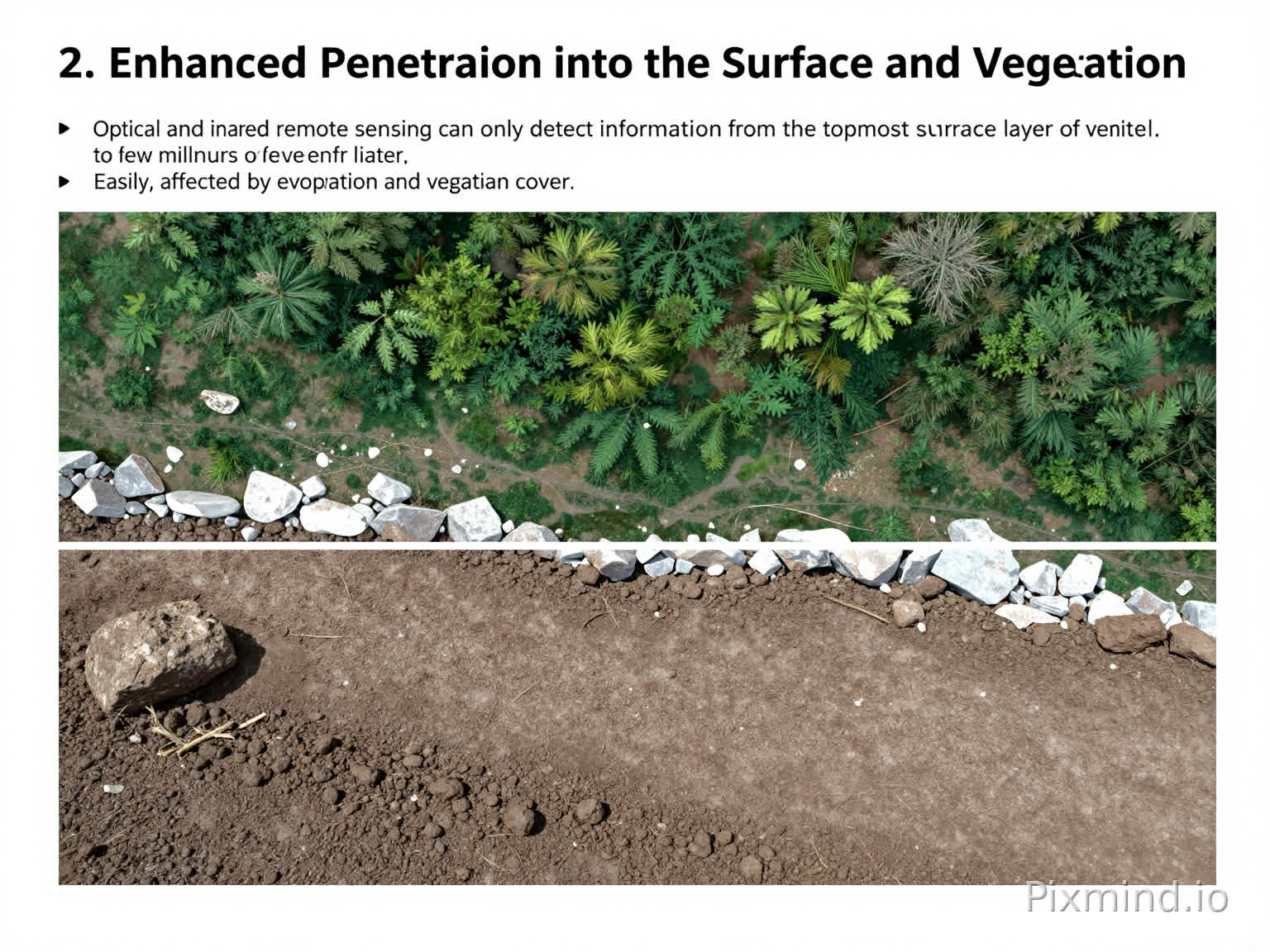
2. Enhanced Penetration into the Surface and Vegetation Optical and infrared remote sensing can only detect information from the topmost surface layer of targets. For example, soil moisture observations are limited to a few millimeters of the surface layer, easily affected by evaporation and vegetation cover. Microwave remote sensing can penetrate: • Vegetation canopies: Accessing information about soil and surface structures beneath vegetation; • Dry soil, snow cover, and rock/ice layers: With penetration depths up to several meters, it can detect subsurface features such as underground aquifers, ancient river channels, and subglacial topography, providing unique data for geological and hydrological research.
Relación de aspecto: 4:3Dimensiones: 1440x1080