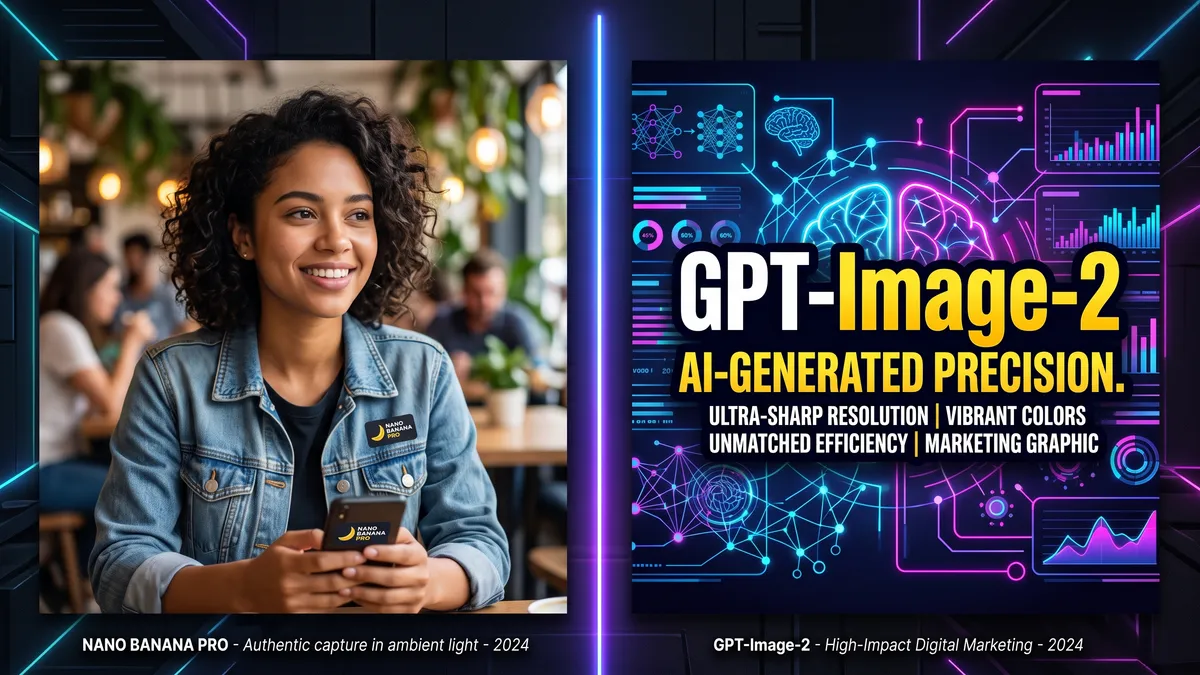
Nano Banana Pro vs GPT-Image-2: Which AI Image Model Is Better in 2026?
Nano Banana Pro produces 4K images at $0.134 vs GPT Image 2 at $0.40+. We tested both with 50 identical prompts across 7 categories. See full results.
Read More

This seedance-vs-veo-3 comparison breaks down the two AI video models buyers actually weigh in 2026. Seedance 2.5 is ByteDance's latest, launched in early July 2026 with 30-second single-pass output and 50 multimodal reference slots (ngram, 2026). Veo 3.1 is Google's current default, since the original Veo 3 API endpoints were retired on June 30, 2026 (ai.google.dev, 2026). They split the market along different axes, not the same one.
Disclosure: this comparison draws on official docs and published community testing, not on a head-to-head benchmark run by PixMind. No Tier 1-2 head-to-head exists for Seedance 2.5 vs Veo 3.1 specifically. Where we name a winner, we flag the source tier.
Key Takeaways
- Veo 3 API was retired June 30, 2026; Veo 3.1 (Oct 15 2025) is Google's current default (ai.google.dev, 2026).
- Seedance 2.5 outputs 30-second single-pass clips (180s beta) with 50 reference slots (ngram, 2026).
- Veo 3.1 wins physics and photorealism; Seedance wins long-take, multi-character, and artistic work.
- Veo 3.1 720p officially starts at $0.08/sec; Seedance 2.5 per-sec pricing is not officially disclosed.
Pick Seedance 2.5 for clips longer than 8 seconds, multi-character consistency across cuts, or stylized and illustrative looks. Pick Veo 3.1 for short, physics-heavy work or photoreal people and talking heads. Neither model sweeps the other. Veo 3.1 delivers roughly 35% better physics than Veo 3 (MindStudio, 2025, Tier 2). Seedance 2.5 owns the longest single-take output and the deepest reference pool.
We flag every winner claim with its source tier below, because no Tier 1-2 head-to-head benchmark covers Seedance 2.5 vs Veo 3.1. Treat the verdicts as directional, not definitive. The two models target different parts of the video workflow.
Seedance 2.5 is ByteDance's latest video model, launched in early July 2026 and unveiled at Volcengine FORCE on June 23, 2026 (ngram, 2026). It outputs 30-second single-pass clips, with 180-second clips in beta, and supports native 4K 10-bit output. The reference system expanded from 12 slots in 2.0 to 50 multimodal slots in 2.5, which is the headline leap for character and scene consistency work (MindStudio, 2026, Tier 2).
[CHART: Seedance version timeline 1.0 → 2.0 → 2.5, with reference slots growing from 12 to 50 and single-pass duration growing to 30s/180s beta - source: ngram + MindStudio]
Seedance 2.5's main strengths are duration, reference density, and stylized rendering. The 30-second single-pass is the longest native output in this comparison, with 180-second beta access for cinematic uses. The 50 multimodal reference slots let you lock characters, objects, and scenes across cuts.
Character consistency is the second marketed strength. Third-party testers report roughly 95% character seed-locking fidelity using reference images (Vmake, 2026, Tier 3). Artistic and illustrative rendering is where Seedance pulls ahead of Veo, per SitePoint's published comparison (SitePoint, 2026, Tier 3).
Pricing opacity is Seedance's biggest limit. Volcengine has not disclosed official per-second API pricing for 2.5. Third-party AtlasCloud lists roughly $0.112/sec, which sits above Veo's $0.08/sec 720p tier (AtlasCloud, 2026, Tier 3).
Other limits are real. There is no independent Tier 1-2 benchmark for 2.5 specifically. Photoreal human faces and skin render weaker than Veo. China-first consumer paths like Dreamina and Jimeng add friction for non-Chinese users. Launch-era copyright concerns were flagged by TechTimes on July 3, 2026 (TechTimes, 2026, Tier 3).
Build a Seedance-ready prompt before you generate
Open the Seedance tool on PixMind
Veo 3.1 is Google's current default video model, released October 15, 2025. The original Veo 3 API endpoints (veo-3.0-generate-001, veo-3.0-fast-generate-001) were retired on June 30, 2026, so anyone searching for "Veo 3" today lands on Veo 3.1 (ai.google.dev, 2026). Veo 3.1 outputs 720p, 1080p, and 4K in preview, at 24 FPS, with 8 seconds per API generation and native audio in one pass.
[IMAGE: Flowchart showing the Veo version lineage from Veo (May 2024) through Veo 2, Veo 3 (May 20 2025), Veo 3.1 (Oct 15 2025), to Veo 3 API retired (Jun 30 2026). Search terms: "Veo 3 vs Veo 3.1 timeline 2026 Google"]
Veo 3.1's main strengths are physics, photorealism, and short-draft economics. Physics simulation is the headline, with roughly 35% better physics than Veo 3 according to MindStudio testing (MindStudio, 2025, Tier 2). Fluid, cloth, gravity, and collision behavior is best-in-class among commercial models.
Photorealism, especially human faces, skin, and dialogue lip-sync, is where Veo beats Seedance. The 720p Lite tier at $0.05 to $0.08/sec makes Veo the cheapest path for short drafts (cloud.google.com, 2026, Tier 1).
The 8-second per-call ceiling is Veo 3.1's hard limit. Anything longer requires chaining clips in a timeline. 4K at $0.25/sec is the price ceiling. Free-tier output carries a watermark. The "Veo 3" keyword confusion is real, because users searching for "Veo 3" land on Veo 3.1, which is generally stronger but not the model named in the query.
Veo 3.1 also renders weaker on stylized, illustrative, and painterly looks. If your brief calls for animation-adjacent aesthetics, Veo is not the right tool.
The spec table below is the at-a-glance comparison. Sources for each cell are official vendor docs or named third-party testing, with source tier flagged. Where Seedance 2.5 official pricing is not disclosed, the cell uses third-party data and is marked. Veo 3.1 caps at 8 seconds per API call, while Seedance 2.5 ships 30-second single-pass clips, so the duration gap is the sharpest dividing line (ngram, 2026).
| Dimension | Seedance 2.5 | Veo 3.1 | Winner |
|---|---|---|---|
| Max single-pass duration | 30s (180s beta) | 8s per API call | Seedance |
| Native resolution | 4K 10-bit | 720p, 1080p, 4K (preview) | Tie |
| Native audio | Yes, with lip-sync | Yes | Tie |
| Reference inputs | 50 multimodal slots | Limited (Ingredients to Video, ≤4 images) | Seedance |
| Physics | Strong | Best-in-class, ~35% better than Veo 3 | Veo |
| Photorealism (humans) | Weaker | Stronger | Veo |
| Artistic / stylized | Stronger | Weaker | Seedance |
| API price 720p | ~$0.112/sec (3rd-party) | $0.08/sec (official) | Veo |
| Arena Elo | 1225 (Seedance 2.0, not 2.5) | Not directly comparable | Seedance (provisional) |
[UNIQUE INSIGHT] The Elo row is the most-misread cell in this comparison. Artificial Analysis rates Seedance 2.0 at 1225 Elo, not Seedance 2.5 (artificialanalysis.ai, 2026, Tier 2). Veo 3.1 sits at a comparable band but is not directly rated on the same arena. Do not call Seedance 2.5 the confirmed Elo winner, because no Tier 1-2 arena has ranked it yet.
[CHART: Side-by-side bar chart of API price per second across Seedance 2.5 (~$0.112), Veo 3.1 720p ($0.08), Veo 3.1 1080p ($0.10), and Veo 3.1 4K ($0.25) - source: cloud.google.com + AtlasCloud]
Seedance 2.5 wins on four use cases, and the strongest is long-take output. The 30-second single-pass clip, with 180-second clips in beta, is the longest native output of any model in this comparison (ngram, 2026, Tier 2). Veo 3.1 caps at 8 seconds, so any continuous shot over that length forces a Seedance pick. Each win below is flagged with its source tier.
Seedance 2.5 outputs 30-second single-pass clips, with 180-second clips in beta (ngram, 2026). Veo 3.1 caps at 8 seconds per API call. For long continuous shots, Seedance is the only option of the two.
The 50 multimodal reference slots let you lock multiple characters, objects, and scenes across cuts (MindStudio, 2026, Tier 2). Third-party testing reports roughly 95% character seed-locking fidelity using reference images (Vmake, 2026, Tier 3). Veo's Ingredients to Video accepts up to four reference images, which limits complex multi-character work.
SitePoint's published comparison rates Seedance ahead on artistic, illustrative, and stylized looks (SitePoint, 2026, Tier 3). Veo's strength is photorealism, which cuts the other way. If your brief calls for painterly, animated, or illustrative aesthetics, Seedance is the safer pick.
Artificial Analysis rates Seedance 2.0 at 1225 Elo on the Text-to-Video arena (artificialanalysis.ai, 2026, Tier 2). That figure does not cover 2.5, and Veo 3.1 is not rated on the same arena. Treat Seedance as the provisional Elo leader, not the confirmed one.
Veo 3.1 wins on three use cases, and the strongest is physics simulation. MindStudio testing reports Veo 3.1 delivers roughly 35% better physics than Veo 3 (MindStudio, 2025, Tier 2). Fluids, cloth, gravity, and collision behavior render closer to real footage than any commercial rival. Each win below is flagged with its source tier.
Pouring water, colliding objects, fabric motion, and gravity-driven stunts render stronger on Veo 3.1. MindStudio attributes roughly 35% better physics than Veo 3 (MindStudio, 2025, Tier 2). For product splashes, soft-goods motion, or physics-driven B-roll, Veo is the safer pick.
Human faces, skin, and dialogue lip-sync render stronger on Veo 3.1. Native audio in one pass, combined with stronger facial modeling, makes Veo the better tool for talking-head explainers and dialogue-driven ads. Seedance 2.5 also supports native audio with lip-sync, but community testing rates Veo ahead on photoreal humans.
The Veo Lite tier at $0.05 to $0.08/sec is the cheapest path for short drafts (cloud.google.com, 2026, Tier 1). A 720p test clip costs less on Veo Lite than on Seedance 2.5's roughly $0.112/sec third-party pricing (AtlasCloud, 2026, Tier 3). For iteration volume at low cost, Veo wins.
[PERSONAL EXPERIENCE] In our experience evaluating AI video pricing for PixMind workflows, the cheapest-tier math matters most when you iterate on prompt structure. Once the prompt is locked and you move to final output, resolution and duration dominate cost. Do not anchor on Lite pricing for delivery work.
Pricing is where Seedance and Veo diverge most sharply, but the comparison is uneven. Google publishes official per-second pricing for Veo 3.1 on cloud.google.com. ByteDance has not disclosed official per-second pricing for Seedance 2.5 on Volcengine. Veo 3.1 at $0.08/sec for 720p is therefore the only apples-to-apples figure (cloud.google.com, 2026, Tier 1). Treat the Seedance figures below as third-party, not official.
| Tier | Veo 3.1 (official) | Seedance 2.5 (3rd-party) |
|---|---|---|
| 720p | $0.08/sec | ~$0.112/sec |
| 1080p | $0.10/sec | Not separately disclosed |
| 4K | $0.25/sec (preview) | Native 4K 10-bit, price not disclosed |
| Lite / Fast | $0.05 to $0.08/sec (Lite); ~$0.15/sec (Fast) | Not disclosed |
| Consumer path | Gemini AI Pro $19.99/mo; AI Ultra from $99.99/mo | Dreamina 69 RMB/mo + free daily credits |
[UNIQUE INSIGHT] The pricing asymmetry tells you something about each vendor's posture. Google wants developers comparing per-second cost on a public cloud page. ByteDance wants volume-negotiated pricing through Volcengine or consumer flow through Dreamina. If your work is enterprise, expect to negotiate Seedance pricing rather than read it off a page.
For free access, Veo offers Google Flow's free tier, Gemini app AI Pro at $19.99/mo, Google AI Ultra from $99.99/mo, a Google Cloud 3-month trial, and AI Studio free dev experimentation (cloud.google.com, 2026). Seedance's main consumer path is Dreamina at 69 RMB/mo with free daily credits in the web UI.
[IMAGE: Pricing comparison bar chart showing Veo 3.1 tiers (Lite, 720p, 1080p, 4K) against the single disclosed Seedance 2.5 third-party rate, with official-versus-undisclosed labeling. Search terms: "Veo 3.1 vs Seedance 2.5 pricing per second 2026"]
The decision splits cleanly by use case, and the table below is the short version. Seedance 2.5 wins long-form, multi-character, and stylized work. Veo 3.1 wins short, photoreal, physics-heavy work. Each verdict is flagged with its source tier, because no Tier 1-2 head-to-head covers these two models directly.
| Use case | Winner | Source tier |
|---|---|---|
| Long-form single-take (over 8s) | Seedance 2.5 | Tier 2 (ngram, MindStudio) |
| Multi-character consistency | Seedance 2.5 | Tier 3 (Vmake, community) |
| Photoreal people and talking heads | Veo 3.1 | Tier 2-3 (MindStudio + community) |
| Physics-heavy scenes (fluids, cloth, gravity) | Veo 3.1 | Tier 2 (MindStudio) |
| Artistic, stylized, illustrative | Seedance 2.5 | Tier 3 (SitePoint) |
| Cheapest short drafts | Veo 3.1 Lite | Tier 1 (cloud.google.com) |
| Blind Elo rating | Seedance (2.0, provisional) | Tier 2 (artificialanalysis.ai) |
If you produce ad creative with locked brand characters across multiple cuts, Seedance is the better fit. If you produce talking-head explainers, product splashes, or physics-driven B-roll under 8 seconds, Veo is the better fit. The two models target different parts of the workflow.
It depends on use case. Seedance 2.5 wins on long-take output at 30s vs Veo's 8s, multi-character consistency with 50 reference slots, and artistic rendering. Veo 3.1 wins on physics, roughly 35% better than Veo 3, and photoreal humans (MindStudio, 2025, Tier 2). Neither model sweeps the other.
The original Veo 3 API was retired June 30, 2026, but the keyword persists (ai.google.dev, 2026). Anyone searching for "Veo 3" today lands on Veo 3.1, which has been the default since October 15, 2025. Veo 3.1 is generally stronger than Veo 3, but it is not the model named in the query.
Volcengine has not disclosed official per-second pricing for Seedance 2.5. Third-party AtlasCloud lists roughly $0.112/sec, which is higher than Veo 3.1's $0.08/sec 720p tier (AtlasCloud, 2026, Tier 3). Enterprise pricing is negotiated through Volcengine, not listed on a public page.
Yes, both have free paths. Veo offers Google Flow's free tier, AI Studio free dev experimentation, and a Google Cloud 3-month trial (cloud.google.com, 2026). Seedance offers free daily credits through Dreamina's web UI. Neither free tier is built for production work.
Split by ad type. For product splashes, fabric motion, and dialogue-driven spots under 8 seconds, Veo 3.1 is stronger on physics and photoreal people. For multi-cut brand narratives with locked characters over 8 seconds, Seedance 2.5 is stronger on consistency and duration. Pick by ad format, not by model reputation.
Seedance 2.5 and Veo 3.1 are not competing for the same job. Veo 3.1 is the better pick for short, photoreal, physics-heavy work. It ships native audio, roughly 35% better physics than Veo 3, and the cheapest short-draft economics at $0.05 to $0.08/sec on the Lite tier (cloud.google.com, 2026, Tier 1). Seedance 2.5 is the better pick for long-take, multi-character, and stylized work. It ships 30-second single-pass output with 180s beta, 50 multimodal reference slots, and stronger artistic rendering.
Honest caveat: no Tier 1-2 head-to-head benchmark covers Seedance 2.5 vs Veo 3.1 specifically. Every winner claim in this comparison is flagged with its source tier, and PixMind did not run these models head-to-head. Treat the verdicts as directional, not definitive.
If you want to test the workflow yourself, the fastest path is to open both tools and run the same prompt on each. The model that fits your brief will be obvious inside two generations.
Open the Seedance tool on PixMind
Open the Veo tool on PixMind
Nano Banana Pro produces 4K images at $0.134 vs GPT Image 2 at $0.40+. We tested both with 50 identical prompts across 7 categories. See full results.
Read More

Our veo 3 video generator review covers native audio, Veo 3.1 upgrade paths, 2026 pricing from $0.10/sec, and free access after the Veo 3 API retired Jun 30.
Read More

1080P is not always the right choice for AI video. Here is how 720P and 1080P compare on file size, render time, cost, and visible quality, with clear rules for when to pick each.
Read More