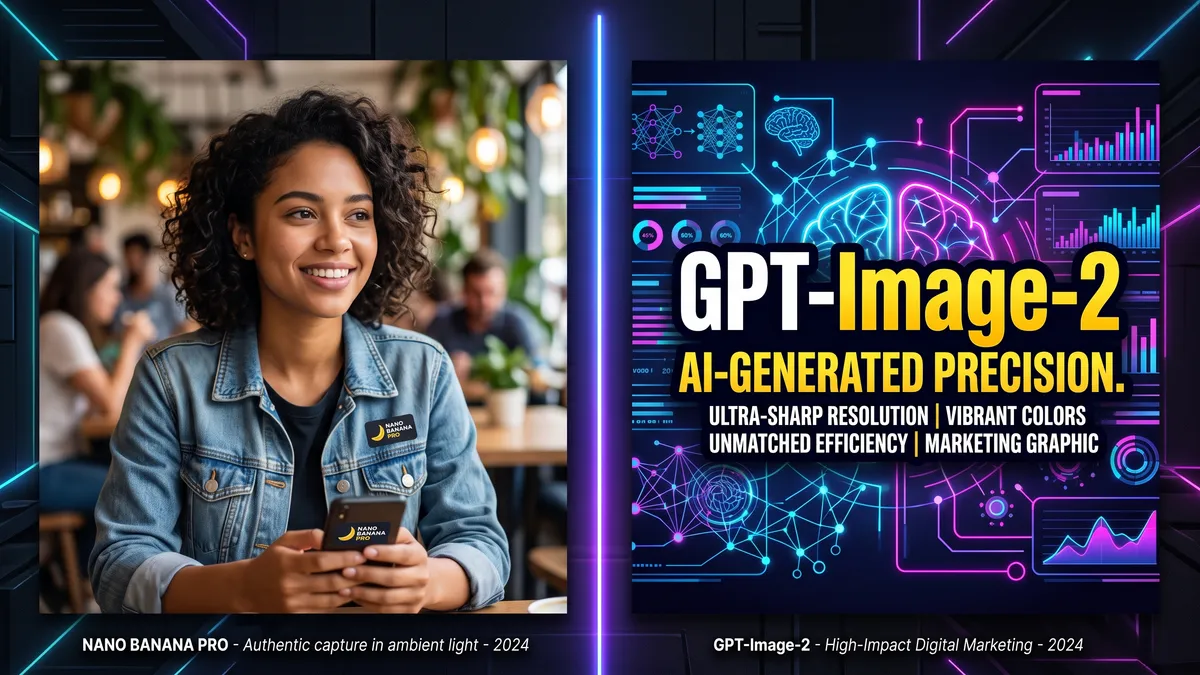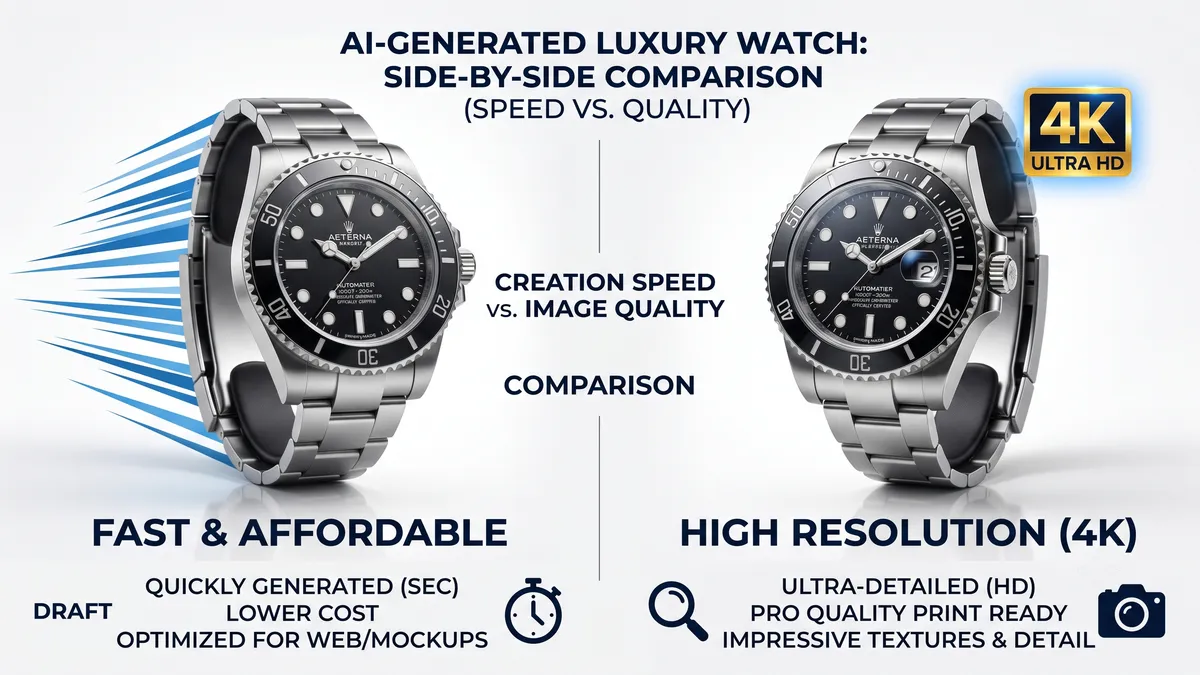
Qwen Image 3 Pro vs Nano Banana Pro: An Honest 2026 Comparison
Choosing between Qwen Image 3 Pro and Nano Banana Pro is not a question of "which is universally better." It is a question of what your product actually needs. As of July 2026, Nano Banana Pro, the community name for Google's Gemini 3 Pro Image, costs roughly $0.13 per generated image and is widely rated as the more photorealistic option (r/QwenImageGen, 2026). Qwen Image 3 Pro (Alibaba, model ID qwen-image-3.0-pro, served on DashScope) answers with bilingual support, lower price, and open-source accessibility. This comparison breaks down where each model wins, where each loses, and which team should pick which. Every claim below ties back to a cited source.
Key Takeaways
- Nano Banana Pro wins photorealism, composition, character consistency, and multi-image fusion, but costs ~$0.13/image (r/QwenImageGen, 2026).
- Qwen Image 3 Pro wins on bilingual Chinese + English support, price, and open-source accessibility (Unifically, 2026).
- Qwen's signature edge is precise in-image text editing and accurate text rendering (Wiro, 2026).
- Pick by use case, not by brand. Realism-critical English-first products should default to Nano Banana Pro. Bilingual, cost-sensitive, or self-hosted products should default to Qwen.
At a Glance: Feature Matrix
| Dimension | Qwen Image 3 Pro | Nano Banana Pro (Gemini 3 Pro Image) |
|---|---|---|
| Realism | Good but "looks like AI" with "typical AI tells" (r/QwenImageGen) | Best-in-class photorealism, composition, character consistency (r/QwenImageGen) |
| Text rendering | Signature edge, precise in-image text editing (Wiro) | Capable but not the category leader |
| Multi-image fusion | Varies | Up to ~20 reference images + SynthID watermarking (Unifically) |
| Bilingual | Chinese + English (Unifically) | Primarily English-first |
| Open weights | Yes, open-source-leaning (VentureBeat) | No, closed Google model |
| ~Price per image | $0.075 official; ~$0.021 on Fal, ~$0.030 on Replicate (Alibaba, pricepertoken) | ~$0.13 (r/QwenImageGen, Unifically) |
| Best for | Bilingual products, text editing, cost-sensitive scale | Realism-critical, English-first, multi-reference workflows |
What Is Qwen Image 3 Pro?
Qwen Image 3 Pro is Alibaba's flagship image generation model, served on DashScope under the official model ID qwen-image-3.0-pro. As of July 2026, the open-source-leaning Qwen-Image family is positioned to compete with Google's Nano Banana Pro on accessibility and bilingual support, not as "a universal replacement" for Gemini 3 Pro Image (VentureBeat, 2026).
A practical advantage of staying inside Alibaba's Model Studio is API continuity: teams already calling earlier qwen-image releases can typically upgrade by changing the model ID, since the DashScope request shape stays consistent across versions.
The Qwen-Image line leans open-source, with weights available for self-hosting on compliant infrastructure. That makes it attractive for teams that need data residency or on-prem deployment. It also has a precise in-image text editing capability, which we cover below.
Citation capsule: Qwen Image 3 Pro (
qwen-image-3.0-pro) is Alibaba's open-source-leaning image model on DashScope, positioned to compete with Nano Banana Pro on bilingual support and accessibility rather than as a universal replacement (VentureBeat, 2026).
What Is Nano Banana Pro?
Nano Banana Pro is the community and marketing name for Google's Gemini 3 Pro Image model. It is a closed, API-first image generator accessed through Google's channels. As of July 2026, it costs roughly $0.13 per generated image and is widely rated as more photorealistic than Qwen's output (r/QwenImageGen, 2026; Unifically, 2026).
The model ships two standout features that Qwen does not match. It accepts up to roughly 20 reference images for multi-image fusion, and it includes SynthID provenance watermarking for AI-generated content (Unifically, 2026). There are no open weights. Nano Banana Pro is the right reference point if your product lives or dies on visual fidelity.
Citation capsule: Nano Banana Pro is the marketing name for Google's Gemini 3 Pro Image. It costs ~$0.13 per image, leads on photorealism, accepts up to ~20 reference images for fusion, and ships SynthID watermarking (Unifically, 2026).
Which Model Produces More Photorealistic Images?
Nano Banana Pro wins on photorealism, and the gap is visible. In direct community comparisons, Qwen output "looks like AI" with "typical AI tells," while Nano Banana Pro delivers better composition and character consistency (r/QwenImageGen, 2026). Independent testing confirms the same pattern for subject extraction and placement in a new environment: both models do a great job, but Nano Banana Pro wins overall (Lumenfall, 2026).
If your product is a consumer-facing image tool where users judge output with their eyes, Nano Banana Pro is the safer default. Qwen Image 3 Pro is competent but visibly synthetic next to Gemini 3 Pro Image. The gap narrows for stylized or illustrative content, where "AI tells" matter less.
Citation capsule: Nano Banana Pro beats Qwen Image 3 Pro on photorealism, composition, and character consistency. Qwen's output "looks like AI" with "typical AI tells" by comparison (r/QwenImageGen, 2026; Lumenfall, 2026).
How Do They Handle Text Rendering and In-Image Text Editing?
Qwen Image 3 Pro wins on text. In a 25-prompt head-to-head test, Qwen's signature edge was precise in-image text editing and strong text rendering, including accurate spelling and clean typography (Wiro, 2026). Nano Banana Pro is capable but is not the leader on this dimension.
This matters more than people think. Posters, product labels, UI mockups, marketing collateral with brand names, and instructional graphics all live or die on whether the text in the image is correct. Qwen's strength here is consistent across both English and Chinese, which is rare.
A common pitfall: teams pick a model for photorealism first, then discover at launch that text in their product vertical (menus, signage, packaging) is garbled. Budgeting for text rendering up front is cheaper than switching models after shipping.
Citation capsule: Qwen Image 3 Pro beats Nano Banana Pro on in-image text editing and text rendering, including accurate spelling and clean typography, based on a 25-prompt comparative test (Wiro, 2026).
How Do They Compare on Multi-Image Fusion?
Nano Banana Pro wins on multi-image fusion, and it is not close. It accepts up to roughly 20 reference images, blends them coherently, and ships SynthID watermarking for provenance (Unifically, 2026). Qwen Image 3 Pro handles reference imagery competently but does not market the same fusion ceiling.
Multi-image fusion is the deciding factor for storyboarding, character consistency across a campaign, and style transfer from multiple source materials. If your workflow pulls reference from a brand kit, a product photo, and a mood board in the same call, Nano Banana Pro is built for that path. Qwen is better suited to single-image edits and direct text-based edits.
Citation capsule: Nano Banana Pro accepts up to ~20 reference images for multi-image fusion and includes SynthID watermarking, capabilities Qwen Image 3 Pro does not match (Unifically, 2026).
What About Bilingual Support (Chinese + English)?
Qwen Image 3 Pro wins on bilingual support, and it is one of its three core advantages over Nano Banana Pro. The model is built and trained for both Chinese and English, alongside its lower price and open-source accessibility (Unifically, 2026). Nano Banana Pro is primarily an English-first model.
This is not a niche concern. Products serving users in mainland China, Singapore, Taiwan, Malaysia, or any Chinese-speaking diaspora audience need Chinese rendering to actually work. Qwen renders Chinese text in-image accurately, including on posters and signage. Nano Banana Pro can struggle with non-Latin scripts, especially for packaging and instructional graphics where the text is the product.
Citation capsule: Bilingual Chinese + English support is one of three core Qwen Image 3 Pro advantages over Nano Banana Pro, alongside lower price and open-source accessibility (Unifically, 2026).
What About Price and Cost per Image?
Qwen Image 3 Pro wins on price, by a wide margin. Official qwen-image-2.0-pro pricing is $0.075 per image on Alibaba Cloud, and third-party providers push the effective cost lower: around $0.021 on Fal and $0.030 on Replicate (Alibaba Cloud, 2026; pricepertoken, 2026). Nano Banana Pro costs roughly $0.13 per image by community reports (r/QwenImageGen, 2026).
At scale, that gap compounds fast. A product generating one million images per month pays roughly $60,000 more per month on Nano Banana Pro than on Qwen via the cheapest third-party provider. Even against Alibaba's official $0.075 price, the difference is tens of thousands of dollars monthly. Qwen's open weights also let you self-host, which can drive the marginal cost close to raw compute.
Citation capsule: Qwen Image 3 Pro costs $0.075/image officially and as low as ~$0.021 on third-party providers, versus ~$0.13/image for Nano Banana Pro, a roughly 6x price spread at the low end (Alibaba Cloud, 2026; pricepertoken, 2026).
What About Open Weights and Vendor Lock-in?
Qwen Image 3 Pro wins on openness, decisively. The Qwen-Image family is open-source-leaning, with weights available for self-hosting and fine-tuning. Nano Banana Pro is a closed Google model accessed only through Google's APIs (Unifically, 2026; VentureBeat, 2026).
Open weights matter for three reasons. First, data residency and compliance: regulated industries can run models on their own infrastructure. Second, fine-tuning: teams with domain-specific imagery (medical, industrial, brand-specific assets) can adapt the model. Third, cost predictability: there is no risk of a sudden API price hike or deprecation. The trade-off is operational complexity, since self-hosting image models at scale is non-trivial.
Citation capsule: Qwen-Image ships open weights for self-hosting and fine-tuning, while Nano Banana Pro is closed and API-only, giving Qwen a structural advantage on compliance, fine-tuning, and cost predictability (VentureBeat, 2026).
Who Should Pick Qwen Image 3 Pro?
Pick Qwen Image 3 Pro if your product depends on bilingual Chinese + English support, low price, or open-source accessibility. These are the three core advantages Alibaba's model holds over Nano Banana Pro (Unifically, 2026). Concretely, this includes five high-fit use cases.
- Chinese-market consumer apps, including social, e-commerce, and education products where in-image Chinese text must render correctly.
- Marketing teams producing localized posters, signage, and packaging with bilingual text requirements.
- Cost-sensitive products operating at high image volume, where the spread between ~$0.021 and ~$0.13 per image materially changes unit economics.
- Regulated industries that need self-hosting for compliance, including healthcare, finance, and public sector.
- Developer tools where in-image text editing is a headline feature, since Qwen leads on text precision (Wiro, 2026).
Who Should Pick Nano Banana Pro?
Pick Nano Banana Pro if realism is your product, full stop. It is widely rated higher for photorealism, composition, and character consistency than Qwen Image 3 Pro, at roughly $0.13 per generated image (r/QwenImageGen, 2026). Five high-fit use cases map cleanly to its strengths.
- English-first consumer apps where users judge output with their eyes, including avatar generators, photo enhancers, and creative tools.
- Advertising and brand campaigns requiring multi-reference consistency across a series.
- Storyboarding and character-driven content that relies on up to 20 reference images per call (Unifically, 2026).
- Products where AI provenance and SynthID watermarking are a compliance or trust feature.
- Premium creative tools where per-image cost is secondary to output quality.
A useful heuristic: the more your output is text- or volume-driven rather than realism-critical, the more Qwen's price advantage dominates. Teams whose assets are mostly illustrative, bilingual, or high-volume tend to land on Qwen; teams whose assets are hero imagery where fidelity is the product tend to land on Nano Banana Pro.

FAQ
Is Nano Banana Pro the same as Gemini 3 Pro Image?
Yes. Nano Banana Pro is the community and marketing name for Google's Gemini 3 Pro Image model. They are the same underlying model, accessed through Google's API channels (Unifically, 2026). The Nano Banana branding is what most developers and product teams use in practice.
Is Qwen Image 3 Pro open source?
The Qwen-Image family is open-source-leaning, with weights available for self-hosting and fine-tuning. Qwen Image 3 Pro itself, served under model ID qwen-image-3.0-pro on DashScope, follows the same accessibility posture as the broader Qwen-Image line (VentureBeat, 2026).
Which model is cheaper per image?
Qwen Image 3 Pro is significantly cheaper. Qwen-image-2.0-pro is $0.075 per image officially and as low as ~$0.021 on third-party providers like Fal. Nano Banana Pro costs roughly $0.13 per image, a roughly 6x spread at the low end (Alibaba Cloud, 2026; pricepertoken, 2026; r/QwenImageGen, 2026).
Which model is better for Chinese-language images?
Qwen Image 3 Pro is clearly better for Chinese-language content. Bilingual Chinese + English support is one of its three core advantages over Nano Banana Pro, alongside price and open weights (Unifically, 2026). Nano Banana Pro is primarily English-first and can struggle with non-Latin scripts.
Which model is better for photorealistic faces and people?
Nano Banana Pro is the better choice for photorealistic faces and people. It is widely rated higher for photorealism, composition, and character consistency, while Qwen's output exhibits "typical AI tells" by comparison (r/QwenImageGen, 2026; Lumenfall, 2026).
The Verdict
The honest answer in July 2026 is that neither model is universally better. Nano Banana Pro wins photorealism, composition, character consistency, and multi-image fusion, and ships SynthID provenance watermarking. You pay for it, at roughly $0.13 per image. Qwen Image 3 Pro wins on price (as low as ~$0.021 per image on third-party providers), bilingual Chinese + English support, open-source accessibility, and in-image text editing precision.
The recommendation is straightforward. If your product is realism-critical and English-first, pick Nano Banana Pro. If you serve Chinese speakers, run at scale, need open weights, or depend on accurate text in images, pick Qwen Image 3 Pro. For mixed workloads, run both: Qwen for volume and bilingual tasks, Nano Banana Pro for hero assets. Tie the choice to your users, your unit economics, and your vertical, not to brand loyalty.
Meta description: Qwen Image 3 Pro vs Nano Banana Pro (2026): realism, text, bilingual, price, open weights. Nano Banana Pro wins realism at ~$0.13/image; Qwen from ~$0.021. (158 characters)