Seedance 2.5 vs Kling: Which AI Video Model Wins in 2026?
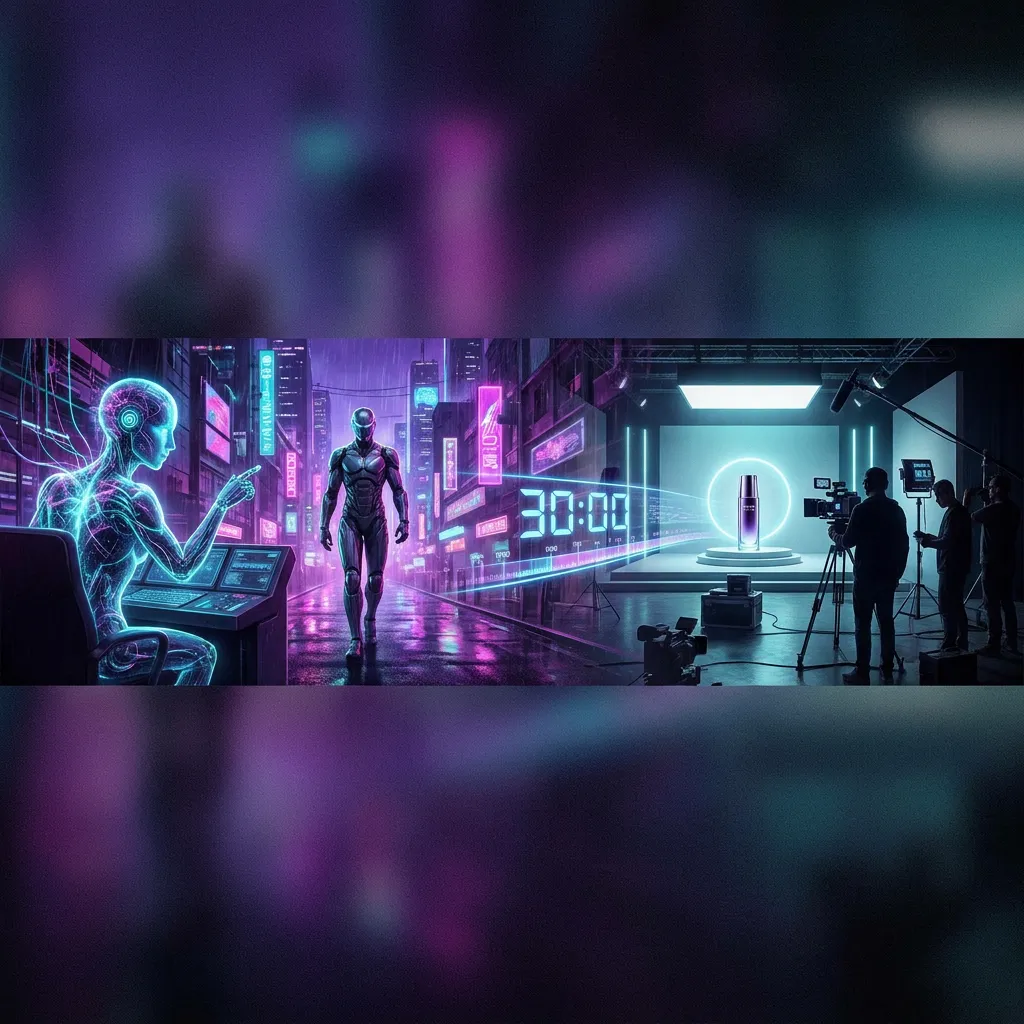
ByteDance's Seedance 2.5 and Kuaishou's Kling are the two Chinese AI video models that set the global pace in 2026, and they have taken noticeably different routes. Seedance 2.5 has gone long: a native 30-second single shot, up to 50 multimodal references, and region-level editing. Kling has gone precise: best-in-class motion transfer, performance capture, and strong short-form control.
If you are choosing between them for a production workflow in 2026, the decision rarely comes down to "which is better overall." It comes down to which model fits the specific shot you are trying to make. The same creative brief can produce very different results depending on which tool you hand it to, which is why experienced teams stop asking which model is best and start asking which model is best for this 10, 20, or 30 second beat in front of them.
This comparison breaks down the verified differences across the dimensions that actually affect output: duration, references, resolution, editing, audio, and pricing. It also walks through two real workflow showdowns where the same brief is handed to both models, surfaces what third-party inference platforms report, and gives a clear per-use-case recommendation. All specs are verified as of 2026-07-31 against the BytePlus Seedance 2.5 guide and the connected Kling routes on PixMind.
2026 AI video comparison pillar
Key Takeaways
- Choose Seedance 2.5 for longer continuous takes (up to 30s), heavy reference work (up to 50 inputs), native 4K, and region-level editing.
- Choose Kling for motion-transfer and performance-capture shots where you need to drive specific body or camera motion from a reference video.
- The two models have different strengths, not a single winner. Most production teams use both depending on the shot.
- Pricing on Seedance 2.5 is not yet published; Kling's connected routes on PixMind are billed per second. Treat any cross-model price comparison as an estimate until both rates are confirmed live.
- For batch work, plan a hybrid pipeline: route long and reference-heavy shots to Seedance 2.5, and short motion-transfer beats to Kling.
The Two Models at a Glance
Seedance 2.5 is ByteDance's newest video model, announced at the Beijing FORCE event on June 23, 2026 and rolling out through July. Kling is Kuaishou's video model family, with the Kling 3.0 Turbo and Kling V3 Motion Control routes widely available on aggregator platforms through 2026. Both generate audio-capable video from text and image inputs, but the specs diverge sharply once you look past the basics.
The table below expands each dimension into the fields that actually decide a shot. Read it row by row, not column by column: the goal is to find the dimension that decides your call, then pick the model that wins it.
| Dimension | Seedance 2.5 | Kling (3.0 Turbo / V3 Motion Control) |
|---|---|---|
| Maker | ByteDance (Doubao family) | Kuaishou |
| Max single-shot duration | Up to 30 seconds | 3 to 15 seconds |
| Reference inputs | Up to 50, multimodal (image / video / text / audio) | Image-led; motion-video reference on the Motion Control route |
| Native resolution | Native 4K | Up to 1080p (720p on Turbo) |
| Editing model | Region-level, preserves the rest of the clip | Regenerate; Motion Control transfers motion onto a character image |
| Audio | Unified joint generation in the same task | Supported |
| Standout strength | Long takes, reference direction, post-generation editing | Motion transfer, performance capture, short-form control |
| Typical shot role | 20 to 30 second scene, hero film, reference-heavy product shot | 3 to 15 second motion-driven beat, dance or gesture transfer, fast iteration |
| Best for | Long takes, heavy reference direction, post-editing | Short, motion-precise shots, performance transfer |
Spec verification: All rows above verified 2026-07-31 against the BytePlus Seedance 2.5 resource guide and the connected Kling routes on PixMind. Kling route specifics can change on aggregator platforms, so confirm in the live generator before submitting.
Seedance 2.5 model page
Watch: Seedance 2.5 vs Kling Compared
The fastest way to internalize the difference is to watch both models discussed in context. The editorial walkthrough below covers what the Seedance 2.5 workflow actually changes and where competitors like Kling still hold ground:
noscript fallback: Seedance 2.5 Changes Everything on YouTube covers the 30-second native clip, the 50-reference workflow, and where competitors like Kling still lead.
For the model's own demo footage of the 30-second single shot and region-level editing, the official Seedance 2.5 reel is also worth watching alongside the editorial analysis:
noscript fallback: Seedance 2.5 demo on YouTube.
Where Seedance 2.5 Wins
Longer single takes
Seedance 2.5 generates up to 30 seconds of continuous video in one pass. Kling's connected routes top out at 15 seconds, in the 3 to 15 second range. For a shot that needs a full narrative beat (enter, react, exit) in one coherent clip, Seedance 2.5 avoids the stitching and continuity drift that comes from concatenating shorter generations.
That gap sounds small on a spec sheet and large in production. A 25-second product hero that would otherwise be three stitched 10-second clips becomes a single take with one continuous light field, one identity state, and one camera logic.

More references, more control
Seedance 2.5 accepts up to 50 multimodal inputs per request. Kling is primarily image-led, with the Motion Control route adding a motion-video reference. If your shot needs to reconcile a character identity, a product, a style image, a motion video, and an audio rhythm all at once, Seedance 2.5's reference budget is the deciding factor.
The practical rule is one input, one role. Assign every reference a single explicit job (identity here, product geometry there, motion in this clip, rhythm in that audio), and remove anything that competes for the same property. Reference budget without reference discipline produces mushy output.
Native 4K and region-level editing
Seedance 2.5 outputs native 4K and lets you edit one region of a finished clip without regenerating the whole thing. Kling's editing model is regenerative: to change a detail, you rerun the shot. For production teams iterating on a near-final clip, region-level editing is a meaningful time saver.
Our finding: Native 4K is a delivery-quality lever, not a creativity lever. It will not save a weak composition, but it does make a strong shot usable on large displays, in product films, and in high-DPI social formats where 1080p would read soft. Region-level editing is the bigger workflow win because it turns a full rerun into a surgical pass.
Where Kling Wins
Motion transfer and performance capture
Kling's V3 Motion Control route is purpose-built for transferring motion from a reference video to a character image. You supply a character photo and a motion video; the model applies the body and camera motion to your character while preserving their identity. Seedance 2.5 can follow a motion reference within its multimodal input set, but Kling's dedicated Motion Control route is more directly controllable for this specific job.
For dance, gesture, sports, or any shot where the exact body motion is the deliverable, Kling Motion Control is still the more reliable tool. The character image anchors identity; the motion video drives performance; the model binds them without the character drifting.
Short-form precision and turnaround
For a tight 3 to 5 second social clip where you need predictable, controllable motion, Kling's Turbo route is fast, cheap per second, and well-understood. If the shot does not need 30 seconds or 50 references, Kling's lighter routes are often the more efficient choice.
Turbo is also the right route for iteration: test a hook variant, swap a color, change a camera move, and run each test cheaply. Promote the winner to a higher-resolution route or to Seedance 2.5 for the final pass.
Workflow Showdown: Same Brief, Two Models
Specs in a table only go so far. The two workflows below take a concrete brief and show what each model actually does with it, including inputs, parameters, and the result you should expect.
Workflow A: 30-second product hero film
The brief is a 25 to 30 second continuous hero film for a skincare bottle: a slow camera orbit around the product, an environmental interaction with water droplets at the midpoint, and a final hero composition with the brand logo revealed. The shot is one continuous take, with audio rhythm synced to the camera moves.
Seedance 2.5 approach (recommended for this brief):
- Inputs:
@Image 1product bottle photo (geometry and label);@Image 2studio palette and lighting;@Video 1reference camera orbit;@Audio 1rhythm track for the soundtrack;@Textdescribes the water-droplet beat at the midpoint and the logo reveal at the end. Roughly 5 of the 50 reference slots used, with plenty of headroom for style frames. - Parameters: 25 to 30 second duration, native 4K, unified audio-video joint generation enabled.
- Edit pass: After the first generation, the client asks to swap the bottle on the right shelf. Use region-level editing on that region, regenerate only it, preserve the rest.
- Result: One continuous clip with coherent lighting, identity, and camera logic across the full take; audio synced in the same pass; one surgical edit at the end. No stitching, no full reruns.
Kling approach (where it struggles on this brief):
- Kling cannot produce a single 30-second clip. You would split the brief into at least two 10 to 15 second generations, then stitch. Continuity between clips (lighting, product geometry, logo state) becomes your problem, not the model's.
- Kling's reference handling is image-led, so the camera orbit, palette, and audio rhythm all need to be encoded into text direction or a motion-video reference. You lose the explicit per-role reference budget.
- Region-level edits require regenerating the entire clip from the changed point forward.
Our finding: When the brief is a long continuous scene with multiple directional inputs and a known edit pass, Seedance 2.5 is the right tool and Kling is the wrong one. The dimensions that decide the call here are duration plus reference budget plus editing, all three of which Seedance 2.5 wins.
Workflow B: 10-second motion-transfer dance clip
The brief is a 10 second vertical social clip where a specific character (a supplied photo) performs a specific dance (a supplied motion video). Identity must stay locked to the character photo; motion must follow the dance video precisely.
Kling V3 Motion Control approach (recommended for this brief):
- Inputs:
Character image(one photo, locks identity);Motion video(the dance clip, drives body and camera motion). - Parameters: 10 second duration, 1080p vertical, Motion Control route selected.
- Result: The character from the photo performs the dance from the motion video, with identity preserved across the full clip. The model is purpose-built for this binding job.
Seedance 2.5 approach (workable but indirect):
- Seedance 2.5 can ingest the character image and the motion video within its 50-reference multimodal set, with text direction asking the model to follow the motion video. The model will often produce a reasonable result.
- The tradeoff is indirection. Seedance 2.5 does not have a dedicated "transfer this exact motion onto this character" route. It treats the motion video as one reference among many, so motion fidelity depends on how heavily the model weights it relative to the other inputs.
- For strict performance capture where the exact body motion is the deliverable, this indirectness costs iterations.
Our finding: When the brief is performance capture (identity plus motion), Kling Motion Control is the right tool and Seedance 2.5 is the workaround. The dimension that decides the call here is motion transfer, which Kling wins by design.
Kling V3 Motion Control deep dive
Pricing: Treat Estimates as Estimates
This is where side-by-side comparisons get risky, so let's be precise about what is and is not verified.
- Seedance 2.5 official pricing: not yet published as of 2026-07-31. Third-party estimates range widely (roughly $0.04 to $0.353 per second). Do not treat any specific number as confirmed.
- Kling connected routes on PixMind: billed per second, with the live rate shown in the generator before you submit.
Any "Seedance 2.5 is cheaper or more expensive than Kling" claim you read right now is built on an estimate. For a fair cost comparison, wait for Seedance 2.5's live pricing and then compare actual per-second charges at the same duration and resolution. Until then, budget the two models separately and read the live generator for the current rate every time.
It is also worth separating per-second price from per-shot cost. A 30-second Seedance 2.5 generation that lands the brief in one pass may be more cost-effective than three 10-second Kling generations plus the labor of stitching and continuity cleanup. Conversely, a 5-second Kling Turbo iteration may be the cheapest way to A/B a hook variant. Cost-per-second is a unit price; cost-per-delivered-shot is what you actually pay.
What Independent Reviewers and Platforms Say
Independent coverage of both models largely tracks the dimension-by-dimension breakdown above. A few sources are worth reading directly for the operational and benchmarking perspective:
- EvoLink publishes comparison notes on aggregator-friendly models and routinely contrasts Seedance and Kling on duration, reference handling, and per-second economics. Their model documentation is a useful cross-check for the spec table above (verified 2026-07-31; consult the current page for any route changes).
- fal.ai hosts Seedance 2.5 on its inference platform and publishes model cards covering latency, input types, and reference limits. Their model documentation is particularly useful for developers planning an API integration because it surfaces the request schema and the per-second rate side by side (verified 2026-07-31).
- WaveSpeed carries both Seedance and Kling routes and reports benchmarked latency on its own infrastructure. Their notes are valuable when you care about turnaround under load, not just spec-sheet capability (verified 2026-07-31).
- Atlas Cloud documents Seedance 2.5 and Kling on its model platform with a focus on reference multimodality and audio support. Their model pages are a useful cross-check for the audio and editing rows in the comparison table above (verified 2026-07-31).
The consensus across independent coverage: Seedance 2.5 is a genuine workflow upgrade for long-form, reference-heavy, editable work, while Kling remains the tool of choice for motion transfer and short-form control. Reviewers consistently flag that live pricing for Seedance 2.5 and real-world consistency over the full 30 seconds are the open variables. That matches the verification posture in this guide.
Reading third-party benchmarks carefully: Inference platforms benchmark on their own infrastructure with their own queue depths, so latency numbers are not directly comparable across platforms. Use them to understand relative behavior, then test on the platform you actually plan to ship on.
AI inference platforms compared
When to Use Both: The Hybrid Pipeline
Most production pipelines in 2026 do not pick one model. They pick a primary model per shot type and route each shot to the tool that wins its deciding dimension. A realistic short brand film might break down like this:
- Hero shot (20 to 30 seconds, continuous, reference-heavy): Seedance 2.5. The 30-second native duration and 50-reference budget are the deciding factors.
- Product B-roll (5 to 10 seconds, tight motion control): Kling Turbo. Fast, cheap per second, predictable.
- Character performance beat (3 to 10 seconds, specific body motion): Kling V3 Motion Control. Identity plus motion binding is the deciding factor.
- Edit pass on the hero shot (region swap): Seedance 2.5 region-level editing. Surgical change without a full rerun.
- Final stitched assembly: Cuts between the Seedance 2.5 hero and the Kling B-roll, with audio cleanup as needed.
The reason this works is that the two models fail in different places. Seedance 2.5 fails earlier on strict motion transfer; Kling fails earlier on long continuous takes and heavy reference direction. A hybrid pipeline routes around both failure modes.
Our finding: The teams getting the most out of both models in 2026 keep a one-page routing rule on the wall. If the shot is longer than 15 seconds or needs more than a handful of references, it goes to Seedance 2.5. If the shot is motion-transfer or short-iteration, it goes to Kling. If both apply, split the shot.
Which Model Should You Choose?
Pick Seedance 2.5 if your shot needs:
- A continuous take longer than 15 seconds
- More than a handful of reference inputs guiding different aspects of the frame
- Native 4K delivery
- Post-generation region edits instead of full reruns
- Unified audio generated with the picture
Pick Kling if your shot needs:
- Motion transferred from a reference video onto a specific character
- A short (3 to 15 second), highly controllable clip
- The lowest per-second cost for a quick iteration (Turbo route)
- Predictable, well-understood short-form output
Use both when:
You are building a multi-shot sequence where some shots are long and reference-heavy (Seedance 2.5) and others are short motion-transfer beats (Kling). Many production pipelines in 2026 do exactly this. No single model covers every shot type, and pretending otherwise is how teams end up with a model sized for the wrong half of the brief.
Seedance 2.5 vs Kling FAQ
Is Seedance 2.5 better than Kling?
Neither is universally better. Seedance 2.5 leads on duration (30 seconds), reference count (50), native 4K, and region-level editing. Kling leads on motion transfer and short-form controllability. The right choice depends on the shot, not on a single overall ranking.
Can Kling generate 30-second video like Seedance 2.5?
No. Kling's connected routes top out at around 15 seconds per generation. Seedance 2.5's 30-second native single shot is currently the longer option. Longer Kling sequences require stitching multiple clips, which introduces continuity drift.
Which has more reference inputs, Seedance 2.5 or Kling?
Seedance 2.5 accepts up to 50 multimodal references (image, video, text, audio). Kling is primarily image-led, with a motion-video reference on the Motion Control route. For heavy reference direction, Seedance 2.5 has the larger budget.
Is Seedance 2.5 or Kling cheaper?
It is too early to say. Seedance 2.5's official pricing is not published; Kling's connected routes are billed per second. Compare actual live charges at the same duration and resolution once Seedance 2.5 pricing is confirmed. Until then, treat any cross-model price claim as an estimate, and remember that per-shot cost (including stitching and editing labor) can diverge sharply from per-second price.
Does Seedance 2.5 do motion transfer like Kling?
Seedance 2.5 can follow a motion reference within its multimodal input set, but it does not have a dedicated motion-transfer route like Kling V3 Motion Control. For strict "transfer this exact motion to this character" work, Kling is the more direct tool and usually the cheaper one in iterations.
Can I edit a Seedance 2.5 clip without regenerating it?
Yes. Region-level editing lets you change one area of a finished clip while the rest preserves its motion, lighting, and identity. Kling's editing model is regenerative: changing a detail means rerunning the shot.
Does either model generate audio?
Both models report audio support. Seedance 2.5 uses a unified architecture that generates synchronized audio in the same task when the selected mode supports it. Kling also supports audio. In both cases, model capability does not guarantee publish-ready sound. Review speech clarity, lip sync, source matching, distortion, and timing on every clip meant to ship with audio.
Which is better for batch production of many shots?
For a batch of long, reference-heavy shots, Seedance 2.5's per-shot economics and region editing win. For a batch of short motion-driven clips, Kling's Turbo route is faster and cheaper per second. For mixed batches, plan a hybrid pipeline that routes each shot type to its best model rather than forcing the whole batch through one tool.
Which has the easier learning curve?
Kling's surface is narrower and easier to learn first: image in, motion video in (on Motion Control), short clip out. Seedance 2.5's 50-reference multimodal input set is more powerful but demands more discipline, with one role per reference, explicit assignment, and a clear edit plan. Teams new to AI video often start with Kling for fast wins and add Seedance 2.5 as their reference-directing skills mature.
Where can I try Seedance 2.5 and Kling?
Both are available on PixMind. The Seedance 2.5 model page hosts the generator and full route details; Kling's connected routes live in the video model selector. For programmatic access, the Seedance 2.5 API route documents the endpoint, authentication, and request examples.
Match the Model to the Shot
Seedance 2.5 and Kling are complements, not substitutes. Seedance 2.5 is the tool for longer, reference-rich, editable scenes; Kling is the tool for precise, short, motion-driven shots. Pick by shot, not by brand. The teams that get the most out of either model are the ones who stop asking which is best overall and start asking which is best for the specific 10, 20, or 30 second beat in front of them.
→ Try Seedance 2.5 for a long, reference-heavy scene, or explore Kling routes in the PixMind video model selector for motion-transfer work. Full route details on the Seedance 2.5 API page.
Seedance 2.5 facts verified against the BytePlus Seedance 2.5 guide and the ByteDance FORCE announcement, 2026-07-31. Kling specs verified against connected routes on PixMind. Third-party platform references (EvoLink, fal.ai, WaveSpeed, Atlas Cloud) verified 2026-07-31; consult each platform's current model documentation for live rates and latency. Seedance 2.5 pricing is unpublished and marked as estimate-only.