What should I include in a restaurant sign prompt?
Include the exact name, cuisine, service model, audience, price position, location, preferred materials, and whether you want a day or night presentation.
Can I generate cafe and food-shop signs too?
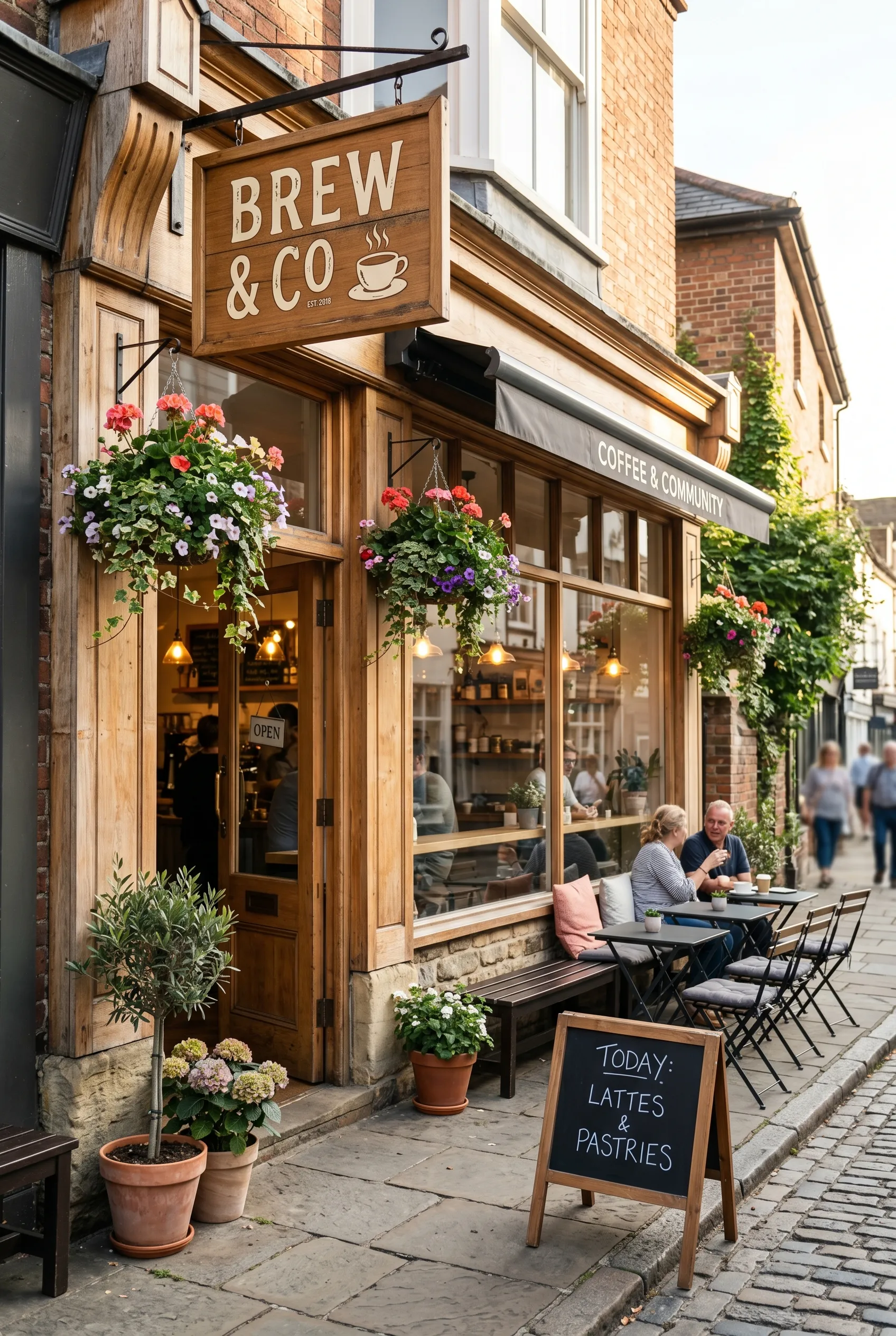
Yes. The restaurant workflow can be adapted for cafes, bakeries, tea shops, dessert shops, bars, quick-service restaurants, and other food businesses.
Can AI add a food icon or cultural motif?
It can, but request restrained, relevant cues and review them carefully. Literal stock icons and inaccurate cultural symbols can make the brand look generic or inappropriate.
Can I apply the concept to my real restaurant?
Yes. Switch to Photo Redesign and upload a clear storefront image to test the direction while asking the model to preserve the building geometry.
How should a takeaway storefront differ from fine dining?
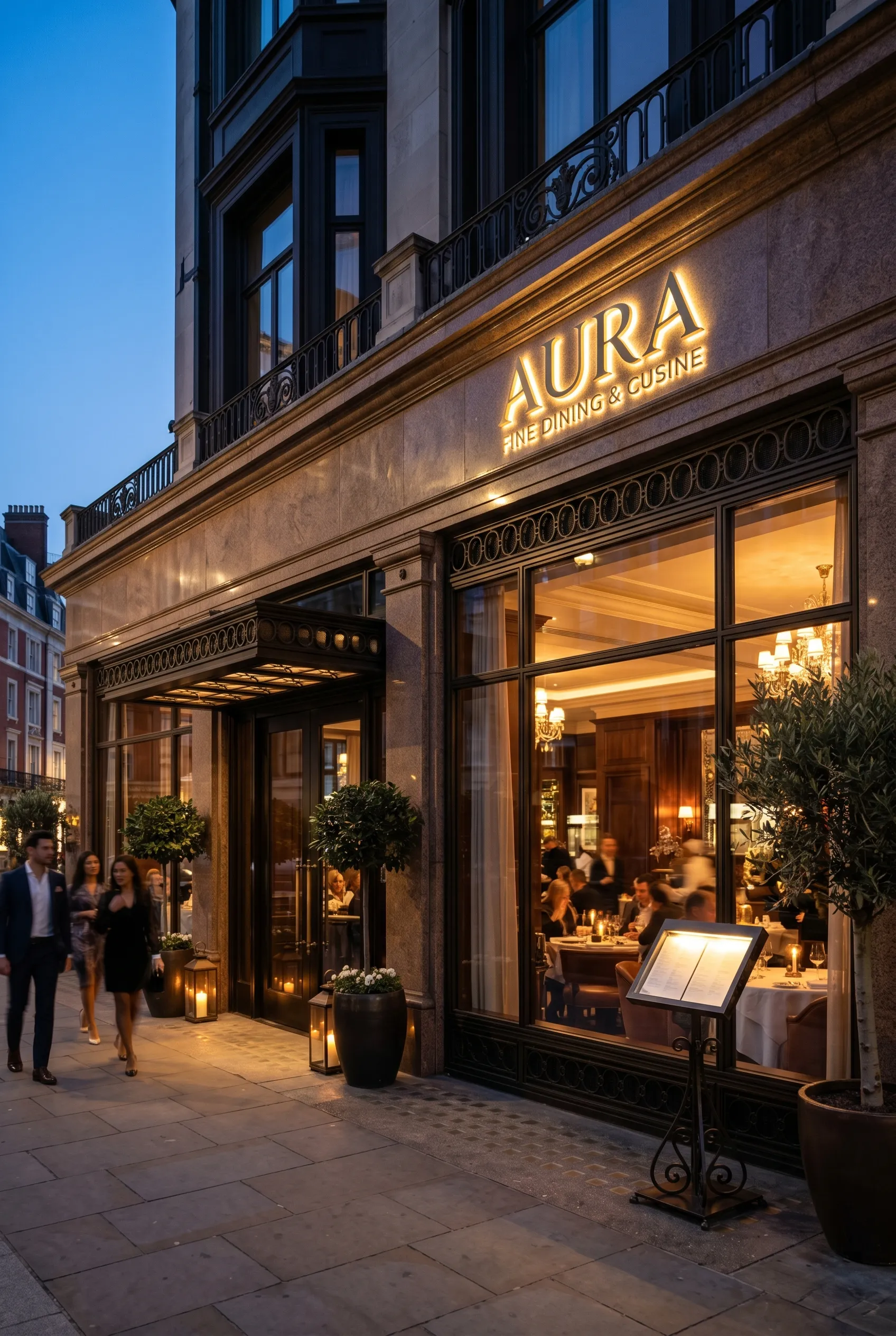
Takeaway concepts usually need faster recognition, brighter access, and clearer ordering cues; fine dining can use more restrained lettering, layered materials, and controlled entrance lighting.
Can I create versions for lunch and evening service?
Yes. Keep the restaurant identity and facade fixed, then compare a daylight version for material clarity with a dusk version for sign and entrance lighting.
Why does the restaurant concept look themed or cliched?
Ask for contemporary cultural cues, material and spatial references, and customer experience details while excluding literal food icons, costume-like decoration, and generic neon slogans.
How many restaurant directions can I compare in one run?
Choose one to four outputs. Keep the cuisine, audience, and price position fixed so the differences reveal useful visual directions rather than unrelated businesses.
What operational details should I review?
Check entrance visibility, menu placement, queue and takeaway flow, window privacy, cleaning access, weather exposure, sign glare, and local frontage restrictions.